


 info@greenexpomax.com

What Is a SEG Aluminum Fabric System and How Does It Work?
 Nov 20, 2026|
 View:3

A SEG aluminum fabric system pairs a tensioned fabric graphic with a silicone edge strip that presses into a grooved aluminum frame. SEG stands for silicone edge graphics, and the name describes the mechanism directly: a thin silicone bead sewn along the fabric perimeter slots into the frame channel, so the graphic stays taut without visible hardware. The sections below cover how a SEG aluminum fabric system is built, how it is installed and serviced, where the format fits, and which variables drive cost. Each face of a frame carries one graphic, and a graphic swap takes minutes rather than a reprint cycle.
Key Takeaways
SEG stands for silicone edge graphics. A thin silicone strip sewn into the fabric presses into a grooved aluminum frame, and that strip, not visible hardware, holds the surface flat.
The silicone bead grips the frame channel along its full length. That continuous grip pulls the fabric tight and produces the frameless look buyers associate with a SEG aluminum fabric system.
Graphic replacement needs no tools: one person lifts a corner, peels the bead free, and presses a new panel into the channel. First-time frame assembly takes one Allen key.
SEG displays work well for retail, trade shows, and backlit signs. They hold sharp detail at close viewing distance and come in a wide size range.
A full SEG aluminum fabric system generally costs more upfront than a banner, because frame, textile, and hardware are bought as one set. The frame is reused, so later cycles replace only the graphic.
What Is a SEG Aluminum Fabric System?
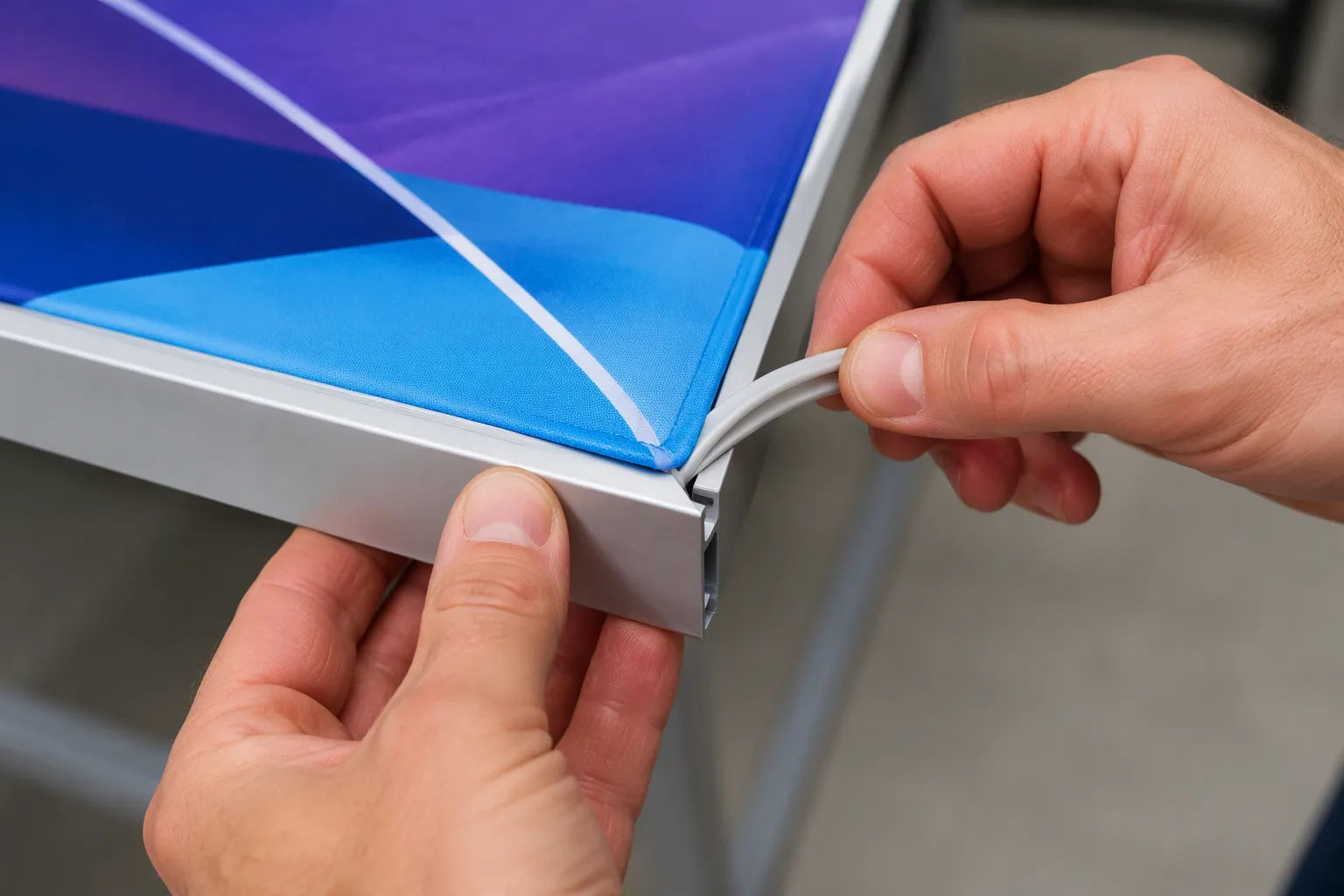
A SEG aluminum fabric system is a display framework that combines a grooved aluminum extrusion with a printed textile panel. The panel carries a silicone strip along its border. That strip locks into the frame and pulls the fabric flat, producing a clean, hardware-free surface for branding and messaging.
SEG Fabric: Construction and Material
SEG fabric is a dye-sublimated textile panel with a thin silicone keder strip sewn around its perimeter. Dye-sublimation printing drives ink into the fibers under heat, so the image becomes part of the cloth rather than a coating on top.[1] The silicone edge forms a flexible, grippy border that fits the frame precisely, and this construction sits at the center of every SEG aluminum fabric system.
The fabric itself comes in several weights and finishes. Blockout textiles prevent light from passing through. Backlit textiles diffuse light evenly for illuminated displays. Each panel is cut and sewn to match a specific SEG frame size, so the graphic fits without wrinkles or slack.
How the Press-Fit Mechanism Works
The press-fit mechanism of a SEG aluminum fabric system relies on a simple action. The silicone edge presses into a recessed groove in the aluminum frame. The groove, often called the frame channel, grips the silicone bead along the entire perimeter, which holds the graphic taut and creates the seamless, frameless look.
The tensioned fabric stays flat because the silicone strip distributes pull evenly around the edges. No tools are needed for the graphic itself. A technician starts at one corner and works the silicone edge into the groove around the frame. The SEG frame holds the panel under consistent tension, so the surface reads as a smooth, continuous image.
Green Expomax offers this system with aluminum frame profiles from 15mm to 180mm wide. Narrow profiles suit close-viewing applications and slim wall displays. Wider profiles add structural depth and visual weight for large-format installations. Each SEG aluminum fabric system is engineered to match the graphic size and the intended viewing distance.
The mechanism also supports fast graphic changes. The silicone edge releases from the groove with a gentle pull, and a new panel presses in just as easily. That makes a SEG aluminum fabric system practical for campaigns that rotate artwork on a regular schedule, because the frames stay mounted while only the textile changes.
A tension fabric system of this type depends on precise sewing and accurate frame dimensions. The silicone strip must align with the groove depth and width. Green Expomax controls both variables during production, so the finished display performs as a reliable, seamless, tensioned surface. A rigid aluminum frame combined with a flexible silicone edge is what gives a SEG aluminum fabric system its distinctive look and its practical advantages.
Silicone Edge Graphics Components and Installation
Frame Profiles, Fabrics, and Printing
The aluminum frame sets the physical foundation of every SEG aluminum fabric system. Green Expomax builds these profiles in widths from 15mm to 180mm, so a slim wall panel and a deep freestanding structure can share the same graphic method. Narrow profiles keep the border visually light, and wider profiles add rigidity for large panels and give the assembly more presence in a room.
Fabric choice shapes how the image reads. Blockout textiles stop light from passing through, which suits single-sided displays and crisp color reproduction. Backlit textiles diffuse illumination evenly, so a backlit SEG fabric lightbox shows no hot spots or dark corners. In a SEG aluminum fabric system, the textile and the light source work as one optical unit.
Printing quality decides how a SEG aluminum fabric system reads at viewing distance. Dye-sublimation printing for SEG fabric drives ink into the fibers under heat, so the image becomes part of the cloth. The process holds fine detail and saturated color across the whole panel, and a print profile set for the chosen textile keeps color consistent from one panel to the next.
How Silicone Edge Graphics Attach to the Frame
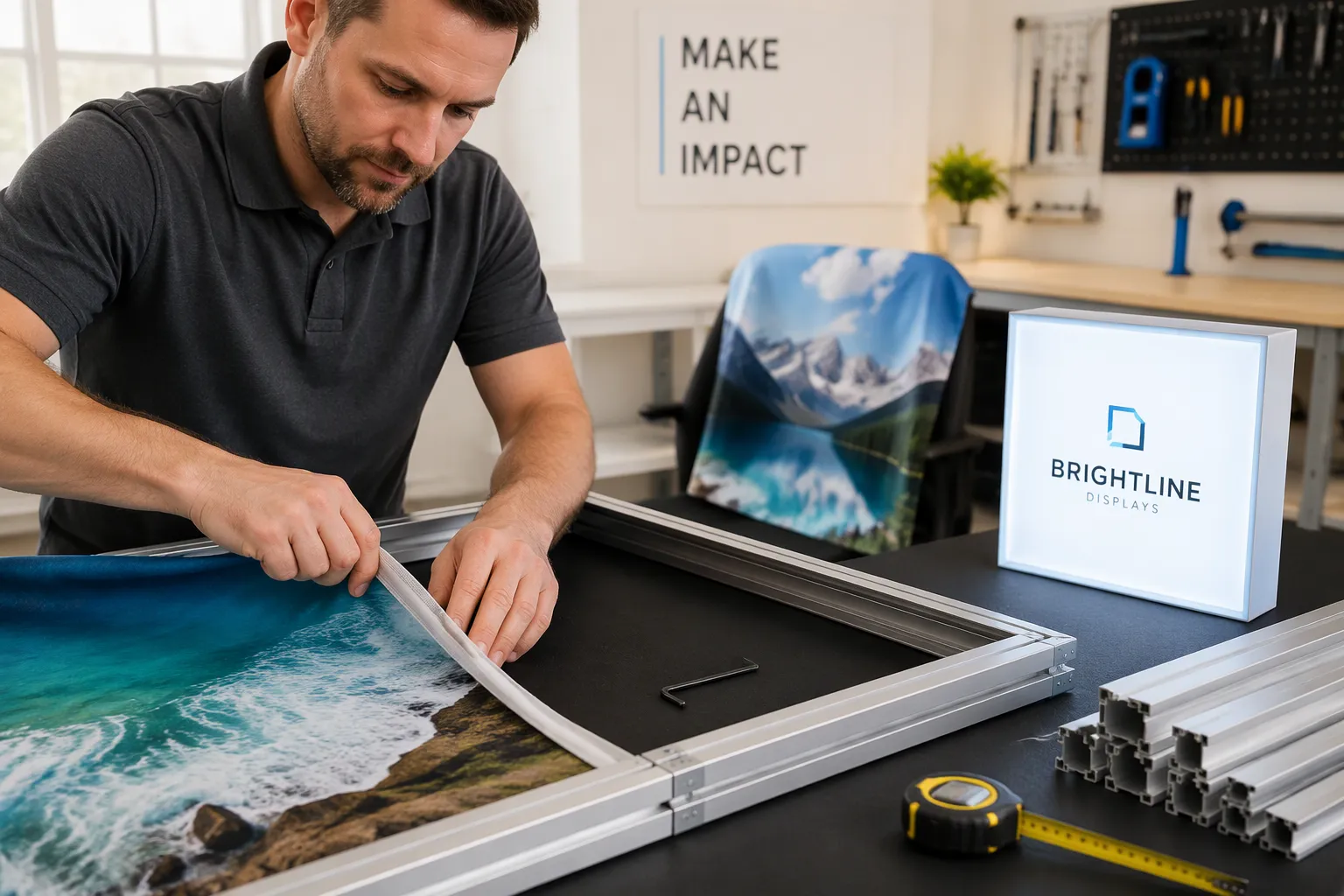
Installing a SEG aluminum fabric system splits into two parts, and only one of them involves a tool. The lightweight aluminum extrusion assembles with a single Allen key; the graphic then goes in by hand. The steps follow a fixed order:
Lay out the frame parts and connect the corners with the Allen key.
Stand the assembled frame upright and check that it sits square.
Start at one top corner and press the silicone edge into the groove.
Work around the perimeter, easing the strip into the channel on each side.
Smooth the fabric and confirm even tension across the face.
The silicone bead grips the frame channel along its full length, and that grip pulls the panel flat to produce the seamless, frameless surface. Removal is just as simple. A technician lifts one corner and peels the strip free, which keeps graphic swaps fast and tool-free and explains why a SEG aluminum fabric system suits campaigns that change artwork often.
Around this core mechanism Green Expomax supplies a SEG aluminum fabric system in several configurations. Single-sided and double-sided fabric displays cover standard branding needs, while single-sided and double-sided light boxes add energy-efficient LED lighting for uniform brightness. Fit the same frame and groove system with a light engine behind the textile and it becomes a backlit box; the LED array spreads light evenly, so the graphic glows with consistent color. Every configuration in the range uses the same press-fit logic, which keeps training and handling consistent across a fleet of frames.
Planning a wall, a freestanding display, or a double-sided box? Send the size and the viewing distance, and we will quote the frame and the graphic together.
Get a QuoteBenefits and Applications
Why Choose a SEG Aluminum Fabric System?
Image quality ranks first among the benefits of a SEG aluminum fabric system. Dye-sublimation printing produces crisp graphics with saturated color across the full panel. The slim, frameless design removes visible hardware from the viewer's line of sight, and because the silicone edge sits flush in the channel, the artwork itself becomes the display.
Practical advantages follow the visual ones. Graphic replacement takes minutes, and one person can handle the swap without tools. The lightweight aluminum construction keeps transport and setup simple. Backlit versions add even LED brightness, so color holds from edge to center.
Installation flexibility broadens the fit. Freestanding, wall-mounted, and hanging options cover most floor plans and ceiling conditions. Green Expomax declares conformity with CE marking requirements[2] and the RoHS directive[3] for its light boxes, and backs the range with a warranty and after-sales service.
Common SEG Display Applications
A SEG aluminum fabric system suits nearly every environment where brands present visual messaging. Retail environments use it for seasonal campaigns and product launches. Trade shows and exhibitions rely on it for quick assembly and sharp graphics at close viewing range. Corporate settings use it for reception walls and brand storytelling.
Shopping malls, auto dealerships, and large-scale marketing activities all benefit from the same mechanism. A tensioned fabric face reads as a finished surface at any scale. Backlit boxes suit showrooms and evening events, where even illumination matters most.
A SEG aluminum fabric system also supports double-sided configurations for open floor plans. Silicone edge graphics press into the frame in minutes, so a venue can refresh messaging between events. Teams that manage many frames value the consistent handling across sizes. A narrow profile suits tight wall spaces, while wider profiles anchor freestanding structures. That range explains why silicone edge graphics appear in so many commercial settings.
SEG Systems vs. Traditional Banners and Rigid Signs
Where Each Format Fits
Each display format has a natural home. Traditional banners suit short-term, low-budget promotions, because a sale weekend or a one-off event rarely justifies a framed system. Rigid signs suit durable permanent wayfinding, where a hard surface has to resist daily contact. Silicone edge graphics suit reusable, premium, and backlit displays, since the bead releases and re-seats quickly and the same frame serves campaign after campaign.
For a SEG aluminum fabric system, the decision often comes down to lifespan and reuse. A SEG display rewards buyers who refresh artwork several times a year, because the frame stays mounted while only the textile changes. Banners and rigid signs each carry their own strengths, and many venues use all three formats side by side. A warehouse might hang banners for a clearance event, mount rigid signs at the entrance, and run fabric frames in the showroom.
Cost Factors to Consider
Several variables drive the price of a SEG aluminum fabric system. Frame size and profile width rank first, since larger extrusions and wider profiles use more aluminum. Fabric type matters next: standard blockout textiles cost less than backlit textiles, which must diffuse light evenly. Configuration adds another variable, because a double-sided build costs more than a single-sided one and LED lighting adds cost on top of frame and graphic.
Graphic replacement frequency shapes the long-term picture. With a SEG aluminum fabric system, buyers who swap artwork often should weigh the cost of new panels against the savings from reusing the frame. Matching frame size, fabric type, configuration, and replacement frequency to the application gives a workable comparison: a short campaign may favor a banner, while a permanent illuminated brand wall favors a SEG fabric lightbox. For the illuminated option in more detail, see our SEG lightbox guide. The right answer depends on the job, not on the format alone.
What the Configuration Actually Changes
A quote for a SEG aluminum fabric system comes down to five choices. The table below maps each one to what it changes on site.
Component | Options | What it changes |
|---|---|---|
Frame profile width | 15mm to 180mm | Border weight, rigidity, and the viewing distance the panel suits |
Fabric type | Blockout or backlit textile | Whether the face is lit from behind or read by reflected light |
Faces | Single-sided or double-sided | Whether one side or both sides carry artwork |
Light source | LED array or no lighting | Brightness and uniformity in darker venues |
Mounting | Freestanding, wall-mounted, or hanging | How the frame meets the floor, the wall, or the ceiling |
Comparing a banner quote with a framed system? We can price the frame once and the replacement graphics separately, so the multi-year cost is visible.
Contact UsConclusion
The silicone edge presses into the frame groove, and that grip pulls the fabric flat into a taut, crisp, frameless graphic on a slim profile. A SEG aluminum fabric system suits professional, reusable, and backlit work, while banners and rigid signs keep their own strengths for one-off promotions and permanent wayfinding. The choice comes down to four variables: frame size, fabric type, configuration, and how often artwork changes. A narrow frame fits tight walls, a wide frame anchors a freestanding display, and because the bead releases cleanly, the frame serves campaign after campaign. Green Expomax quotes a complete SEG aluminum fabric system—frame, textile, and light source—against a drawing or a size list.
FAQ
What does the SEG acronym stand for?
SEG stands for silicone edge graphics. A thin silicone strip sewn along the fabric border presses into a grooved aluminum frame, and that press-fit action holds the graphic taut to produce the frameless surface.
Can one person assemble a SEG frame without special tools?
Yes, with one exception. The frame goes together with a single Allen key and the graphic goes in by hand, so no other equipment is needed for assembly or for graphic changes. That is why a SEG aluminum fabric system can be rebuilt on site by one technician.
How quickly can a graphic be replaced on a SEG display?
Replacement takes minutes. A technician lifts one corner and peels the silicone bead free from the groove, then presses a new panel into the channel by hand. The frame stays mounted while artwork rotates between campaigns, which suits venues that refresh messaging often.
Are backlit SEG light boxes available in double-sided versions?
Yes. Green Expomax supplies single-sided and double-sided fabric displays, plus single-sided and double-sided light boxes. The boxes use energy-efficient LED lighting for uniform brightness, and the frames accept backlit textiles that diffuse light evenly.
What keeps the fabric taut inside a SEG frame?
The silicone bead grips the frame channel along the full perimeter, so tension distributes evenly and the textile stays flat without wrinkles. Precise sewing and accurate frame dimensions keep every frame performing as a reliable tensioned display over repeated graphic changes.
How should a SEG graphic be cleaned?
Dust the face with a soft dry cloth. For marks, a mild soap solution on a damp cloth, applied without scrubbing the printed area, is the usual method. Strong solvents and machine washing shorten the life of the textile.
What artwork setup does a SEG print need?
Prepare the file at the finished frame size in CMYK, with the silicone edge allowance added outside the visual area. Suppliers normally issue a frame-specific template, and a proof against that template prevents a graphic that reads short at the corners.
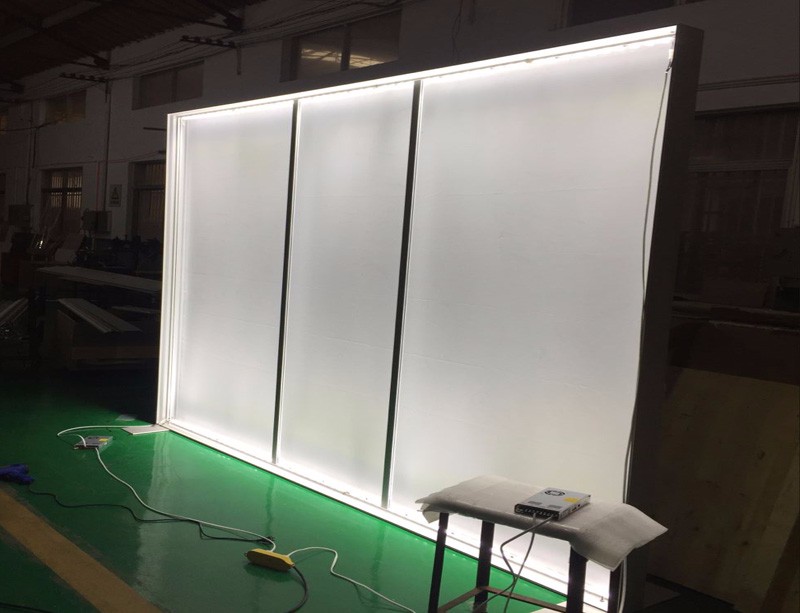
100mm Double-Sided Light Box
Seamless double-sided box with a high-power LED strip.
View Product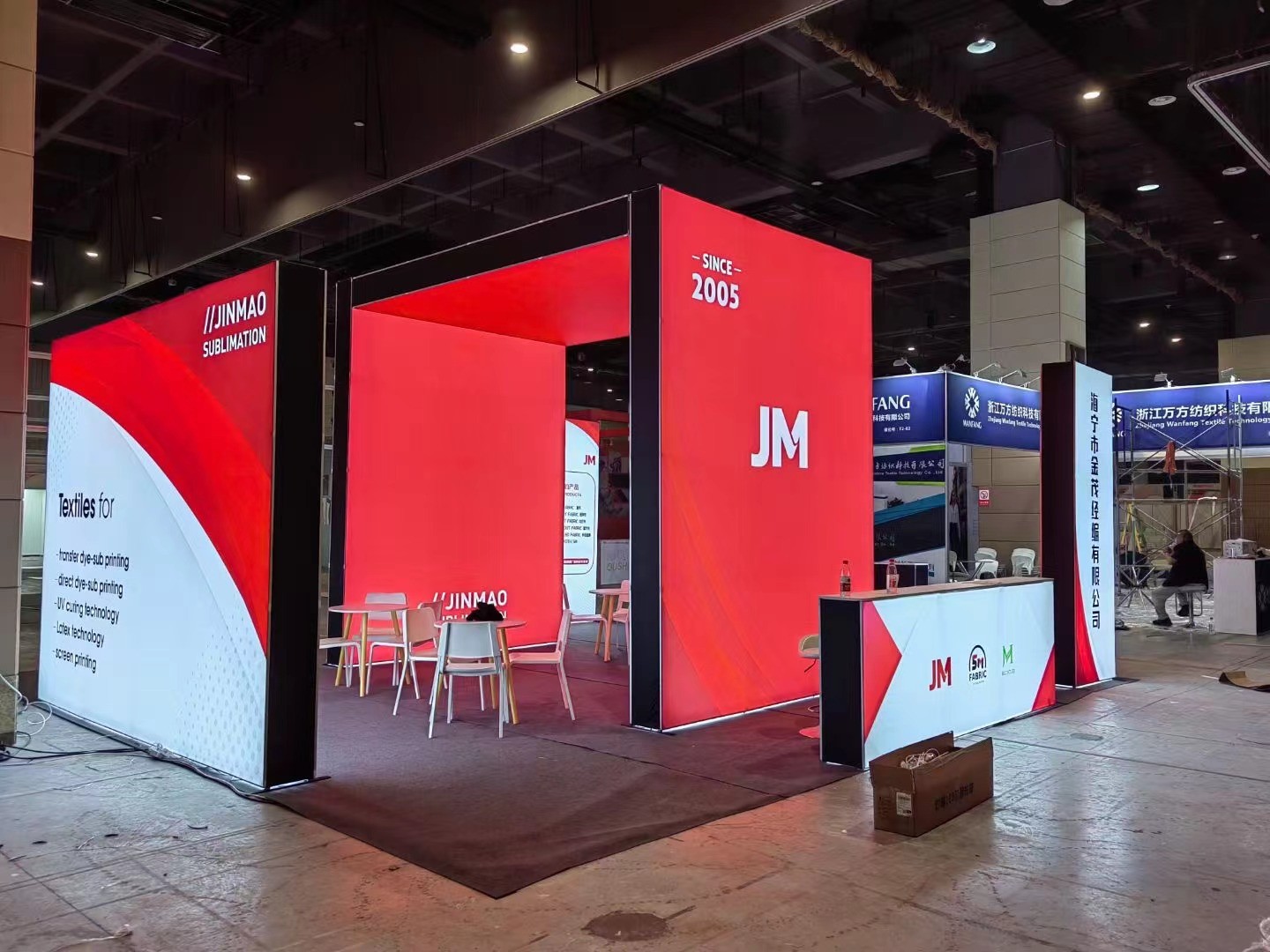
Portable Folding SEG Light Box
Folding frame with adjustable LED lighting for touring displays.
View Product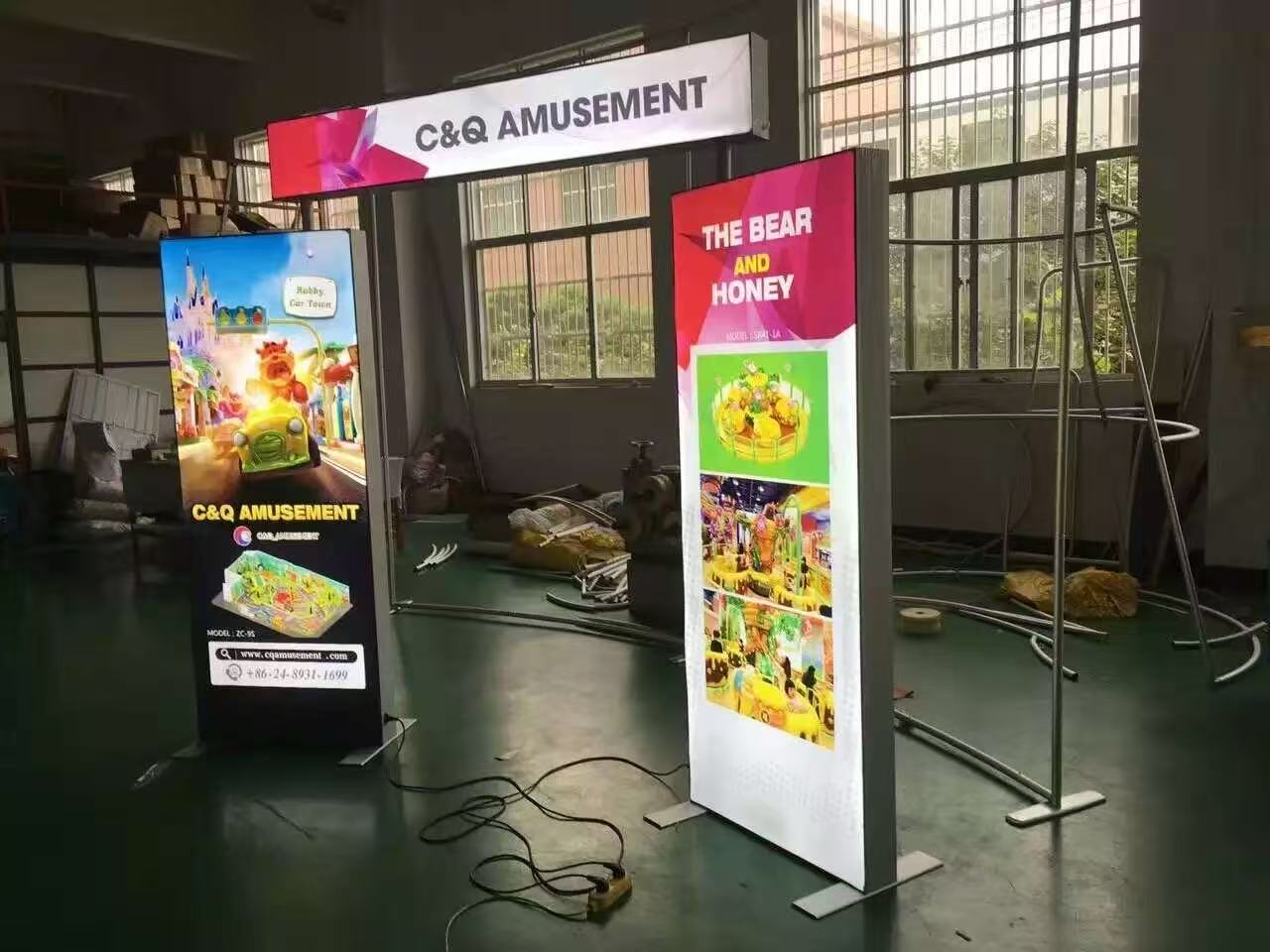
Freestanding Fabric Light Box
Floor-standing unit with even LED illumination and custom sizing.
View Product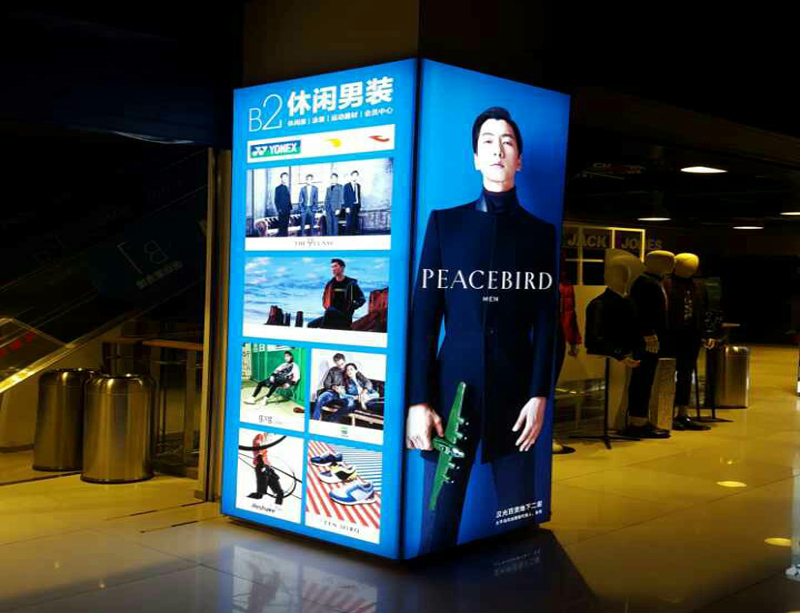
Pillar SEG Light Box
Column format that works as lighting and interior decoration.
View ProductDye-sublimation printing overview, how the dye-sublimation process works.
CE marking requirements, CE marking guidance for manufacturers.
Restriction of hazardous substances, the RoHS directive explained.